Droughts Reshaped Life in the Ancient Indus Valley
The Story
A series of prolonged droughts beginning about 4,200 years ago likely spelled the end of the ancient Indus Valley megacities, according to Cambridge University research published in Communications Earth & Environment in April 2023.
Researchers reconstructed centuries of rainfall by analyzing oxygen, carbon, and calcium isotopes in a stalagmite from a cave near Pithoragarh, India, with high precision uranium series dating establishing the timing.
The record revealed three distinct droughts, each lasting between 25 and 90 years, within an arid period that stretched more than 200 years.
Archaeologist Cameron Petrie called the evidence that drought struck both summer and winter cropping seasons extremely significant, since it made adaptation especially difficult.
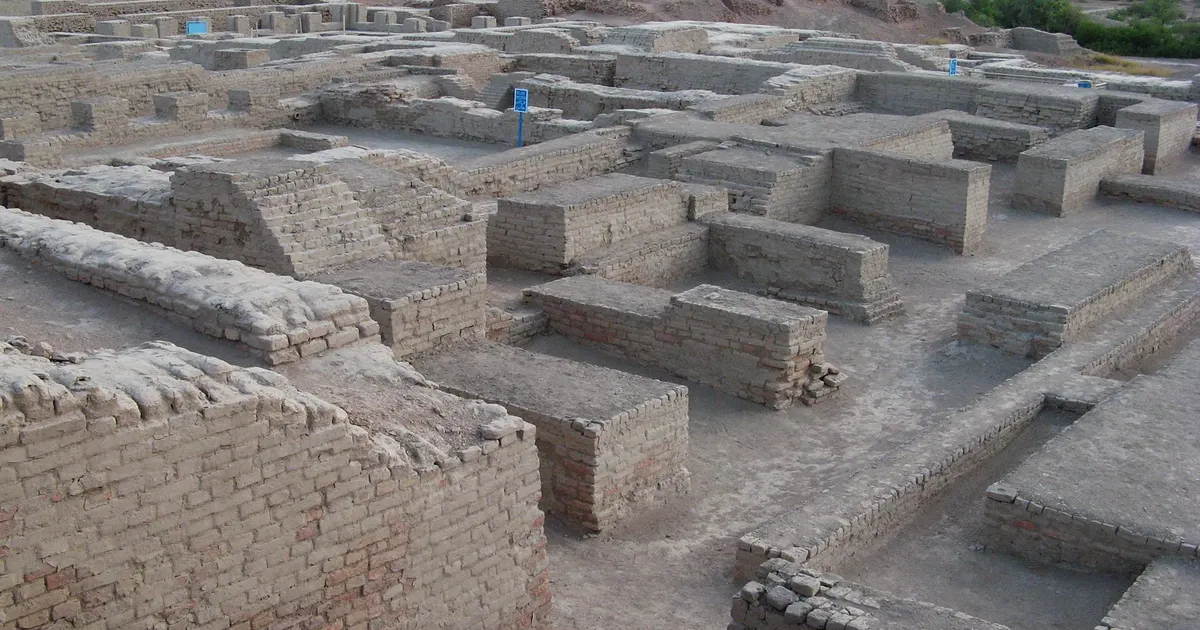
As the dry conditions set in, inhabitants gradually abandoned the large urban centers for smaller rural settlements further east and shifted agriculture toward drought tolerant summer millets.
Lead author Alena Giesche and colleagues frame the transformation as a gradual environmental adaptation rather than a sudden collapse, showing how the civilization took deliberate steps to remain sustainable.
Researchers reconstructed centuries of rainfall by analyzing oxygen, carbon, and calcium isotopes in a stalagmite from a cave near Pithoragarh, India, with high precision uranium series dating establishing the timing.
The record revealed three distinct droughts, each lasting between 25 and 90 years, within an arid period that stretched more than 200 years.
Archaeologist Cameron Petrie called the evidence that drought struck both summer and winter cropping seasons extremely significant, since it made adaptation especially difficult.
As the dry conditions set in, inhabitants gradually abandoned the large urban centers for smaller rural settlements further east and shifted agriculture toward drought tolerant summer millets.
Lead author Alena Giesche and colleagues frame the transformation as a gradual environmental adaptation rather than a sudden collapse, showing how the civilization took deliberate steps to remain sustainable.
Why It Matters
The story has since grown longer. A Communications Earth & Environment study published November 27, 2025 by Hiren Solanki and colleagues models four droughts of more than 85 years each between 4445 and 3418 years ago; the worst ran about 164 years, cut rainfall roughly 13% and covered more than 91% of the Harappan region (Nature). The modern basin is rationed by politics rather than monsoon. India has held the 1960 Indus Waters Treaty in abeyance since the 2025 conflict, its water minister vowing Pakistan would not get "a single drop," and nine in ten Pakistanis live in a basin that irrigates more than 90% of the country's crops (CNBC). Watch the Chenab flows when Pakistan's next planting season opens.
Go Deeper
Read the original reporting at University of Cambridge.
Read Full Story at University of Cambridge →