Over Half of World's Largest Lakes Losing Water
The Story
More than half of the world's largest lakes and reservoirs lost significant amounts of water over the past three decades, according to a study published in the journal Science in May 2023.
A team led by Fangfang Yao analyzed 1,972 of Earth's biggest lakes, representing 95% of total global lake water storage, by combining 30 years of satellite observations from 1992 to 2020 with 250,000 lake area snapshots and nine satellite altimeters.
The results showed 53% of lakes declining, a cumulative loss equivalent to 17 Lake Meads, while only 24% saw significant increases in water storage.
Climate change, unsustainable human water consumption, and sedimentation drove the losses, and nearly two thirds of large reservoirs experienced significant declines.
Drying lakes include the Aral Sea in Central Asia and Lake Mar Chiquita in Argentina, while Armenia's Lake Sevan recovered thanks to water conservation laws enforced since the early 2000s.
Roughly 2 billion people, about one quarter of the global population, live in the basin of a drying lake, underscoring the scale of the freshwater security challenge ahead.
A team led by Fangfang Yao analyzed 1,972 of Earth's biggest lakes, representing 95% of total global lake water storage, by combining 30 years of satellite observations from 1992 to 2020 with 250,000 lake area snapshots and nine satellite altimeters.
The results showed 53% of lakes declining, a cumulative loss equivalent to 17 Lake Meads, while only 24% saw significant increases in water storage.
Climate change, unsustainable human water consumption, and sedimentation drove the losses, and nearly two thirds of large reservoirs experienced significant declines.
Drying lakes include the Aral Sea in Central Asia and Lake Mar Chiquita in Argentina, while Armenia's Lake Sevan recovered thanks to water conservation laws enforced since the early 2000s.
Roughly 2 billion people, about one quarter of the global population, live in the basin of a drying lake, underscoring the scale of the freshwater security challenge ahead.
Why It Matters
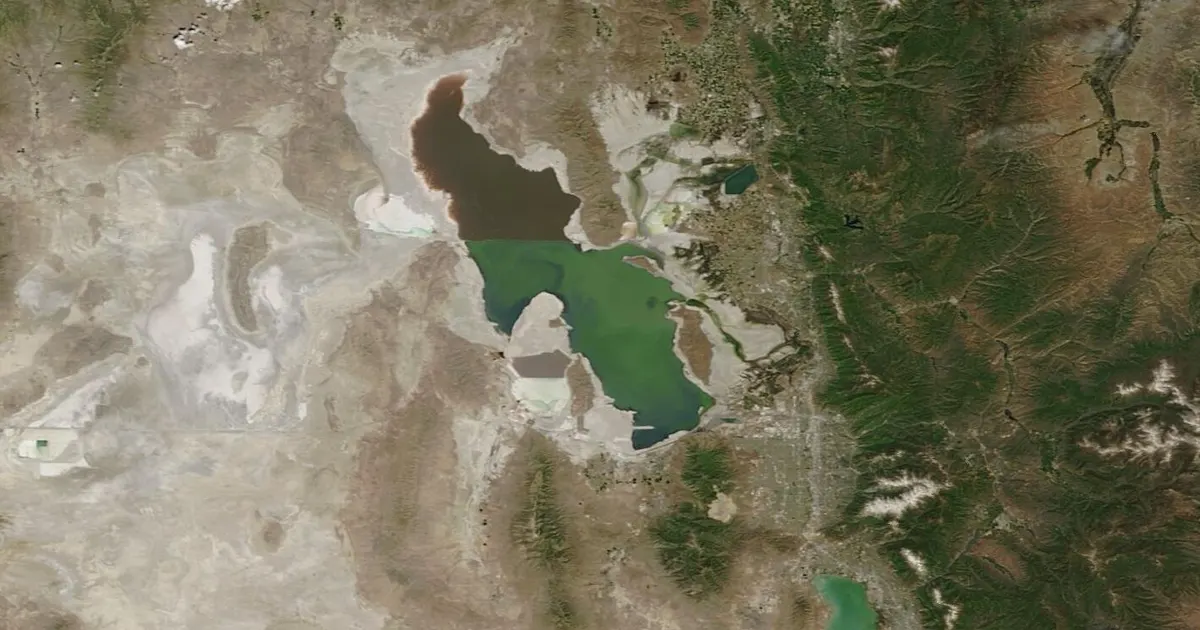
The losses have not stopped. The Caspian Sea has fallen by as much as 30 cm a year since 2020, and a Communications Earth & Environment study warns a drop of just 5 to 10 meters would erase up to 94% of its marine protected areas and strand billions of dollars of infrastructure (Nature). Utah's Great Salt Lake sits at 4,190.40 feet, inches above its 2021 low, and the state's natural resources commissioner calls a record in 2027 "unavoidable" if another dry winter follows; conservation yields 50,000 to 80,000 acre-feet a year against the 1 million the lake needs (Utah News Dispatch). Farmers paid not to plant carry the cost. Watch whether Utah shuts the causeway berm at 4,190 feet.
Go Deeper
Read the original reporting at Phys.org.
Read Full Story at Phys.org →