The Tale of a Treasured Radio and a Father Daughter Bond
The Story
A 1957 Telefunken Opus 7 radio became the thread reconnecting KQED reporter Rachael Myrow to her father, film composer Fred Myrow, decades after his death in January 1999.
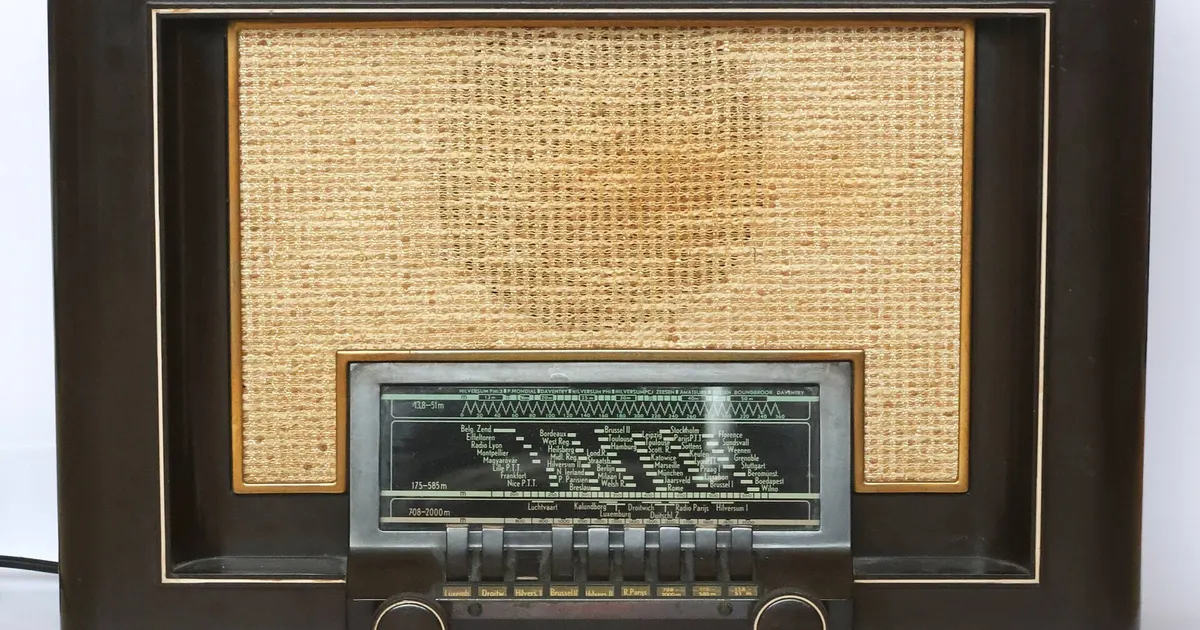
Sorting through his music studio, she found the West German tabletop radio, its wooden cabinet coated in dust and its shortwave dial marked with the names of major European cities.
When she first plugged it in, an orchestra briefly filled the room before the aging components gave out, and the radio then sat silent for 25 years as she moved from Los Angeles to the San Francisco Bay Area.
Fred Myrow, who died at 59, composed avant garde works, theater music, and film soundtracks including Phantasm and Soylent Green, and briefly served as composer in residence at the New York Philharmonic.
In 2024, Myrow brought the radio to Simon Favre, a retired Silicon Valley engineer who restores vintage sets, and for $200 he replaced its capacitors, repaired the tuning wheel, and installed new vacuum tubes.
Collaborator Van Dyke Parks recalled buying the identical model in Munich in 1957, a machine that offered access to Europe's great classical music long before the internet era.
When the restored Opus 7 played orchestral music through its tube amplifiers once again, it revived her bond with her father and showed how inherited objects hold memory.
Sorting through his music studio, she found the West German tabletop radio, its wooden cabinet coated in dust and its shortwave dial marked with the names of major European cities.
When she first plugged it in, an orchestra briefly filled the room before the aging components gave out, and the radio then sat silent for 25 years as she moved from Los Angeles to the San Francisco Bay Area.
Fred Myrow, who died at 59, composed avant garde works, theater music, and film soundtracks including Phantasm and Soylent Green, and briefly served as composer in residence at the New York Philharmonic.
In 2024, Myrow brought the radio to Simon Favre, a retired Silicon Valley engineer who restores vintage sets, and for $200 he replaced its capacitors, repaired the tuning wheel, and installed new vacuum tubes.
Collaborator Van Dyke Parks recalled buying the identical model in Munich in 1957, a machine that offered access to Europe's great classical music long before the internet era.
When the restored Opus 7 played orchestral music through its tube amplifiers once again, it revived her bond with her father and showed how inherited objects hold memory.
Why It Matters
A $200 repair revived more than a radio: the 1957 Telefunken Opus 7 belonged to Fred Myrow, the composer Dmitri Shostakovich singled out in 1958 and whose Phantasm theme keeps earning a quarter century after his death. Written for a film shot for $300,000 that grossed nearly $12 million, the score still pays royalties, turns up sampled by Three 6 Mafia and Mobb Deep KQED Arts notes, and returned for the film's 45th anniversary as a triple LP sourced from the original 1979 master tapes Waxwork Records. Myrow died in January 1999 at 59, decades before that anniversary reissue. Watch the restoration benches next: every repaired tube set argues for keeping the machines that carry a composer's work.
Go Deeper
Read the original reporting at KQED.
Read Full Story at KQED →