Why a Signed Salvador Dali Print Still Needs Evidence
Trill News Original
A Salvador Dalí signature can draw the eye away from the harder question: what, exactly, is the object carrying it? A print has an image, a method of production, an edition and a history. Treating the name at the bottom as an answer to all four questions asks a few letters to do too much work.
That matters to anyone inheriting a framed picture or trying to understand a gallery label. Mistaking a reproduction for an original print changes the claim being made about the object. Dismissing every printed image as a mere copy makes the opposite mistake. The useful starting point is to identify what the evidence establishes, then keep the unanswered questions visible.
An original print can exist more than once
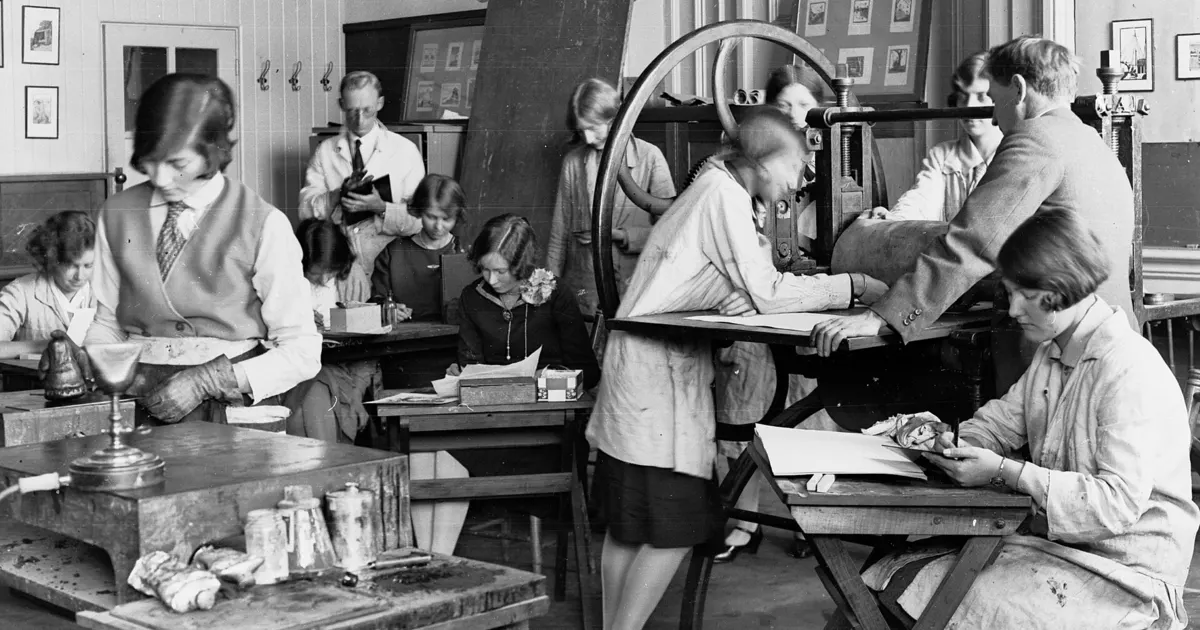
Printmaking allows an artist to create a work through a surface that transfers an image onto paper. The individual results are called impressions. Multiple impressions can belong to an edition, allowing several people to own examples of the work. In MoMA’s introduction to printmaking, the medium includes woodcut, etching, lithography and screenprint; it also frequently involves collaboration with a skilled printer.
The distinction matters because artistic authorship need not mean that the artist personally operated a press for every sheet. A print can be conceived for a process that produces multiples. Its originality does not depend on being the only physical example in existence. Equally, recognizing the subject of a famous painting in a printed image does not establish that the artist created or approved that particular printed work.
Those are different questions. One concerns the relationship between an artist and a work. Another concerns the relationship between a particular sheet and a documented edition. A third asks how the sheet reached its present owner. An answer to one leaves the others open.
What the Dalí Foundation actually asks for
The Gala-Salvador Dalí Foundation’s classification of graphic works separates original graphic works from reproductions. For an original limited edition, its criteria examine five things: the underlying Dalí work, a signed publisher contract, authorized dimensions and materials, the artist’s supervision, and numbering consistent with the edition.
The same document recognizes authorized open editions that are unnumbered and generally lack a handwritten signature. It also describes original limited editions made through combinations of manual and photomechanical processes, or entirely through photomechanical printing. These categories make simple rules about signatures, numbering or machinery unreliable substitutes for identifying the work.
The Foundation excludes reproductions from its graphic-work catalog. That classification should not be turned into an accusation that every excluded object is a forgery. An honestly described reproduction and an object falsely presented as something else raise different issues. Nor does a failed catalog search establish the reason for an absence. The question remains what the object is being claimed to be and what supports that claim.
A number is a starting point
A fractional inscription such as 14/75 appears precise. Getty’s cataloging guidance on editions explains that it identifies an impression within an edition of 75, but does not necessarily mean it was the fourteenth sheet printed. The stated edition size may also differ from the number actually produced.
Getty describes further complications: editions can be distinguished by paper or watermarks, and different publishers can issue separate editions of a work. Identification may require specialist judgment and comparison with a research catalog. The number written on a sheet therefore needs context before it can describe that sheet’s place in the artist’s production.
For a reader, the practical consequence is modest but useful. Record the inscription accurately before interpreting it. Ask which edition it refers to, who published that edition and how the identification was made. A confident answer should connect the sheet to evidence beyond the inscription itself. Repeating the number in a sales description supplies no additional confirmation.
The object and the paperwork must agree
The Dalí Foundation’s account of its graphic-work research describes studying materials and techniques with departments at the University of Barcelona between 2002 and 2016. Its emphasis on examining the works explains why a recognizable image alone cannot settle identification. There is a physical object to investigate as well as a name to look up.
Ownership history adds another kind of evidence. Getty’s explanation of provenance research describes work with sale catalogs, personal papers, inventories and marks on the objects themselves. Its records distinguish exact dates from qualifications such as ownership established by a certain year. Getty also acknowledges that records can be lost or inaccessible and that histories often contain gaps.
That makes uncertainty part of an honest account. A missing stretch of ownership is a reason to investigate, not a self-executing verdict of forgery. A neat succession of owners also leaves a further question: do the documents refer to this particular object? An ownership story and an attribution are related claims, but neither should be allowed to stand in for the other.
What an owner can establish next
The sensible next step is to assemble a description that someone else could check. That means keeping the image, inscriptions, measurements and surviving paperwork together, while distinguishing observed details from inherited explanations. “The sheet carries this number” reports an observation. “This is an authorized edition” adds an interpretation that needs support.
A useful inquiry should also make room for an incomplete answer. There may be enough evidence to identify the image without identifying the edition, or to trace a recent sale without establishing the work’s origin. Calling those limits out prevents a tentative identification from becoming a supposed fact when the object changes hands again.
The purpose is to describe the object accurately enough that the next person can understand what is known. A reproduction can be enjoyed as a reproduction. An original print deserves to be understood through the work that produced it. Before anyone treats a signature as the end of the inquiry, the next question should be which evidence connects that name to this sheet.