A Modest Proposal: Jonathan Swift's Satirical Essay
The Story
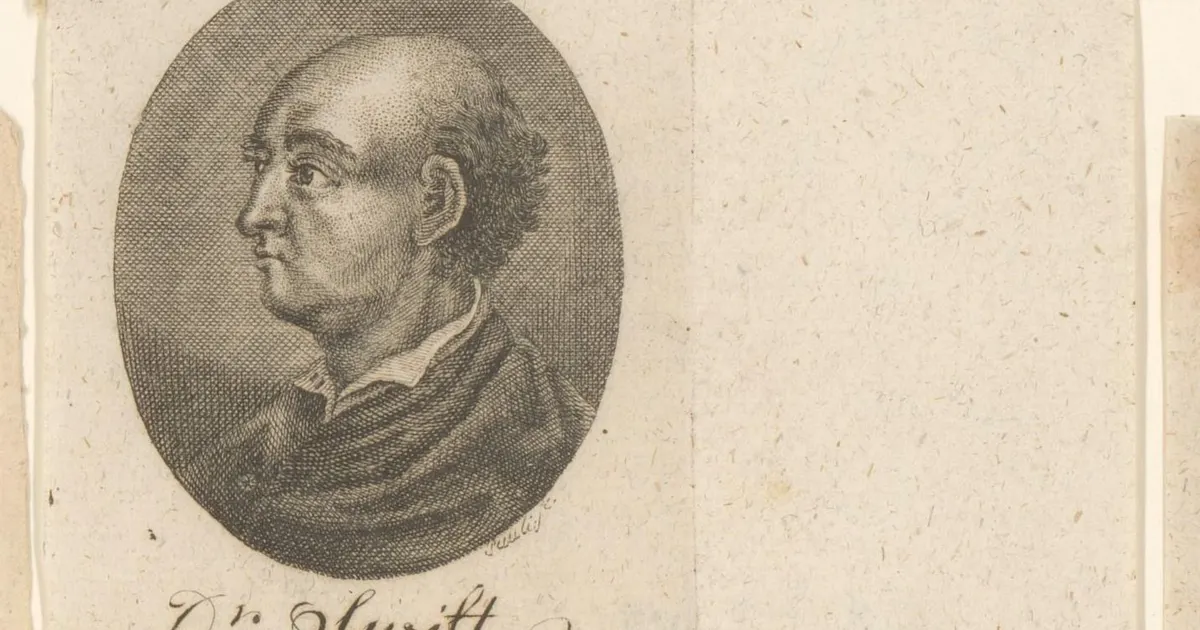
Jonathan Swift published A Modest Proposal in 1729 as a savage work of political satire that ironically urges poor Irish families to sell their one year old children as food for the wealthy.
Swift wrote that a young healthy child well nursed is at a year old a most delicious, nourishing, and wholesome food, using the calm voice of an economist to make the grotesque idea sound rational.
The essay appeared during the harvest failures of 1727 to 1729, when food riots broke out in southern ports, emigration surged, and thousands died from hunger.
Swift, born in Ireland to an English settler father and serving as Dean of St. Patrick's Cathedral in Dublin, wrote from within the Anglo Irish Protestant Ascendancy that ruled Catholic Ireland.
Historian Ian McBride argues the satire aimed less at abstract capitalism than at Irish Protestant landlords whose enclosures converted farmland into pasture for livestock.
After a decade of earnest and ignored pamphlets protesting Ireland's subordination, Swift used shocking irony to force readers to confront the barbarism of landlord policy.
McBride calls it a distinctively Irish critique of a distinctively Irish process of reconquest and recolonization, and it endures as a model of satire.
Swift wrote that a young healthy child well nursed is at a year old a most delicious, nourishing, and wholesome food, using the calm voice of an economist to make the grotesque idea sound rational.
The essay appeared during the harvest failures of 1727 to 1729, when food riots broke out in southern ports, emigration surged, and thousands died from hunger.
Swift, born in Ireland to an English settler father and serving as Dean of St. Patrick's Cathedral in Dublin, wrote from within the Anglo Irish Protestant Ascendancy that ruled Catholic Ireland.
Historian Ian McBride argues the satire aimed less at abstract capitalism than at Irish Protestant landlords whose enclosures converted farmland into pasture for livestock.
After a decade of earnest and ignored pamphlets protesting Ireland's subordination, Swift used shocking irony to force readers to confront the barbarism of landlord policy.
McBride calls it a distinctively Irish critique of a distinctively Irish process of reconquest and recolonization, and it endures as a model of satire.
Why It Matters
A Modest Proposal remains the sharpest piece of satire in English, and Ian McBride’s research grounds its fury in a specific disaster: three successive harvest failures between 1727 and 1729 brought food riots in Ireland’s southern ports, emigration from the north, and thousands of deaths from hunger. Swift, Dean of St Patrick’s Cathedral in Dublin, had spent a decade writing earnest pamphlets nobody heeded, so he proposed eating the children of the poor instead. The target was the Anglo-Irish grazier converting tillage to pasture and expelling tenant villages, a figure McBride calls the epitome of Irish self-destructionUniversity of Oxford. The essay turns 300 in 2029Britannica.
Go Deeper
Read the original reporting at JSTOR Daily.
Read Full Story at JSTOR Daily →