Medieval Saint Rediscovered in English Manuscript
The Story
A newly examined entry in a 15th century service book from Pontefract Priory shows that Thurstan, Archbishop of York from 1114 to 1140, was venerated as a saint, overturning the longstanding scholarly view that he never achieved sainthood.
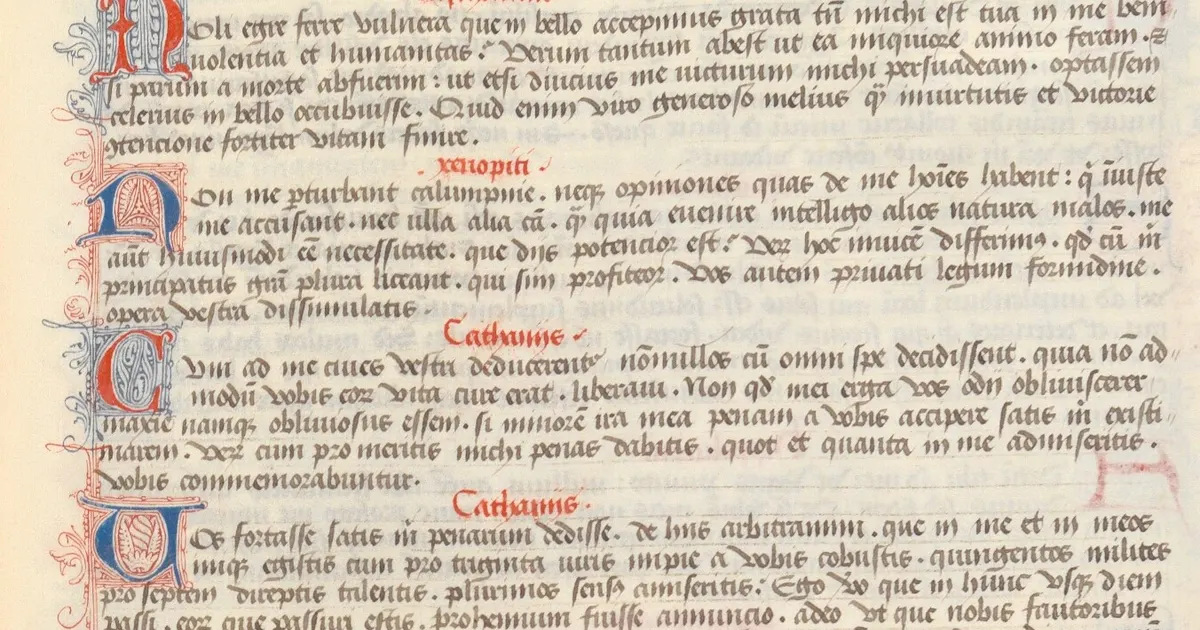
English Heritage historian Dr. Michael Carter found the manuscript in the archives of King's College Cambridge, where a Latin entry for February 6 records the death of Saint Thurstan, archbishop of York, in the year of grace 1140, written in red ink to mark its liturgical significance.
Born in Normandy in 1070, Thurstan ranked among medieval England's most powerful churchmen, founding great northern monasteries including Furness Abbey, Rievaulx Abbey, Kirkham Priory, Gisborough Priory, and Byland Abbey.
He also mustered the English army that defeated Scottish forces at the Battle of the Standard in 1138 and ended Canterbury's longstanding claim of precedence over York.
On January 25, 1140, at age 70, Thurstan resigned his office to fulfill a youthful vow, entered Pontefract Priory as a Cluniac monk, died eleven days later, and was buried before the high altar.
Accounts of an archdeacon's vision after his death, along with reports of his incorrupt body and an odor of sanctity when monks opened his tomb, reinforced his claim to sanctity.
The discovery illuminates how fluid and locally determined sainthood could be in the medieval church and may prompt a reassessment of Thurstan's place in English religious history.
English Heritage historian Dr. Michael Carter found the manuscript in the archives of King's College Cambridge, where a Latin entry for February 6 records the death of Saint Thurstan, archbishop of York, in the year of grace 1140, written in red ink to mark its liturgical significance.
Born in Normandy in 1070, Thurstan ranked among medieval England's most powerful churchmen, founding great northern monasteries including Furness Abbey, Rievaulx Abbey, Kirkham Priory, Gisborough Priory, and Byland Abbey.
He also mustered the English army that defeated Scottish forces at the Battle of the Standard in 1138 and ended Canterbury's longstanding claim of precedence over York.
On January 25, 1140, at age 70, Thurstan resigned his office to fulfill a youthful vow, entered Pontefract Priory as a Cluniac monk, died eleven days later, and was buried before the high altar.
Accounts of an archdeacon's vision after his death, along with reports of his incorrupt body and an odor of sanctity when monks opened his tomb, reinforced his claim to sanctity.
The discovery illuminates how fluid and locally determined sainthood could be in the medieval church and may prompt a reassessment of Thurstan's place in English religious history.
Why It Matters
A line of red ink has returned an English saint to the calendar. In a fifteenth century Pontefract Priory service book, Dr Michael Carter found the Latin entry for February 6: Death of St Thurstan, Archbishop of York, in the year of grace 1140English Heritage. Modern scholarship had concluded Thurstan’s cult never took hold; the monks of Pontefract disagreed for a century, venerating the churchman who rallied the army at the Battle of the Standard in 1138, founded Fountains Abbey, resigned on January 25 1140 and died twelve days later, his body incorrupt when opened two years onGuardian. Medieval sainthood needed no pope, only a monastery’s memory. Thurstan’s feast day, February 6, has its evidence back.
Go Deeper
Read the original reporting at Medievalists.net.
Read Full Story at Medievalists.net →