How Henry George Almost Changed the World
The Story
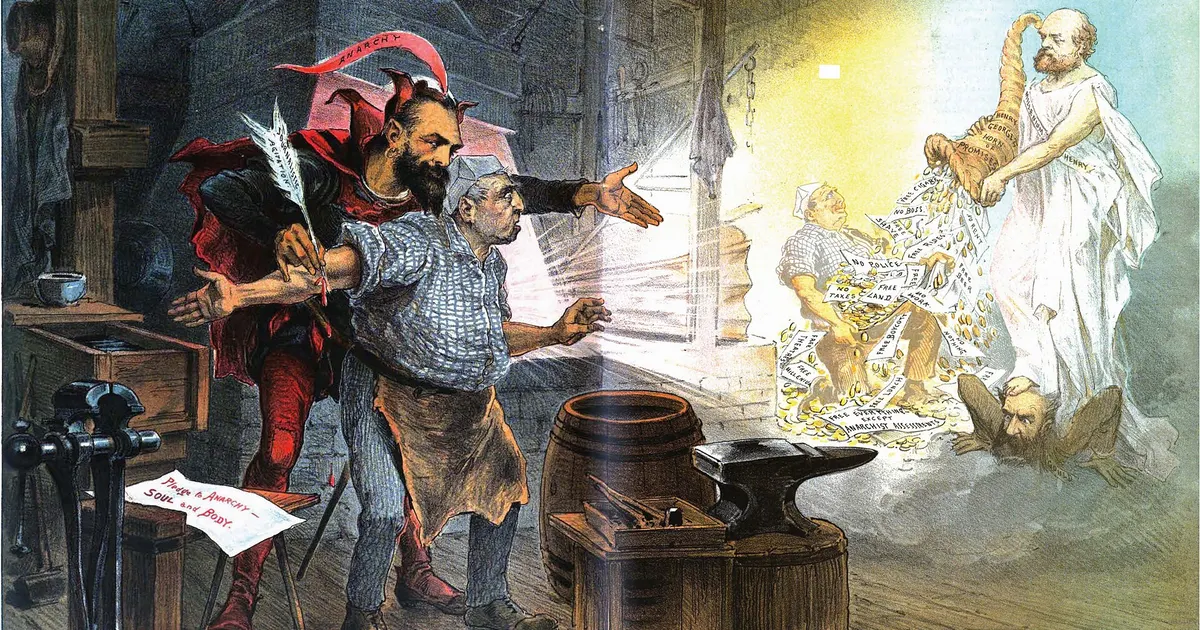
Georgism is an economic philosophy that lets people fully own the value of their own labor while treating the value of land and natural resources as belonging to the whole community.
American economist Henry George popularized the idea in his 1879 book Progress and Poverty, arguing that private capture of land rent drives poverty even as technology advances.
Its central policy is a land value tax on unimproved land, which cannot be passed on to tenants because the supply of land is fixed, and its revenue would replace taxes on income, sales, and trade.
Supporters say the tax discourages speculative hoarding of valuable land, encourages efficient development, and carries almost no economic drag, a point even Milton Friedman conceded when he called it the least bad tax.
The movement shaped political parties in the United States, Britain, Australia, and Denmark, and inspired communities such as Arden, Delaware and Fairhope, Alabama.
The takeaway is that taxing location value rather than labor and improvements could reduce inequality and reshape how cities grow, an idea that keeps resurfacing in modern housing debates.
American economist Henry George popularized the idea in his 1879 book Progress and Poverty, arguing that private capture of land rent drives poverty even as technology advances.
Its central policy is a land value tax on unimproved land, which cannot be passed on to tenants because the supply of land is fixed, and its revenue would replace taxes on income, sales, and trade.
Supporters say the tax discourages speculative hoarding of valuable land, encourages efficient development, and carries almost no economic drag, a point even Milton Friedman conceded when he called it the least bad tax.
The movement shaped political parties in the United States, Britain, Australia, and Denmark, and inspired communities such as Arden, Delaware and Fairhope, Alabama.
The takeaway is that taxing location value rather than labor and improvements could reduce inequality and reshape how cities grow, an idea that keeps resurfacing in modern housing debates.
Why It Matters
Henry George's single tax keeps resurfacing wherever housing fails. More than a dozen Pennsylvania cities have run split rates since Pittsburgh and Scranton adopted them in 1913, and Harrisburg's vacant structures fell from over 4,200 in 1982 to under 500 by 2001 while businesses on its rolls grew to 8,864; the losers were absentee owners of vacant lots Strong Towns. Adoption stays partial because voters whose homes are their main asset resist taxing land, and Houston's version died in Texas courts back in 1915. Detroit's mayor proposed exactly such a swap in 2023, taxing idle parcels to fund cuts for occupied homes Business Insider.
Go Deeper
Read the original reporting at Wikipedia.
Read Full Story at Wikipedia →